By Keva Hoffmann Boardman —
With the Comal County Fair over and done, we look forward to the other fall community events. Dia de los Muertos comes next and will be followed by the granddaddy of them all, Wurstfest!
For me, a first founder descendant, Wurstfest is my favorite. It is much more than beer and sausage. It’s the time families and friends, old and new, gather to have Gemütlichkeit. Translated loosely, that means a time of warmth, friendliness and good cheer amongst people. Wurstfest is also a time we get to dance to the music and songs that have always been a special part of our lives.
The polka music that our grandparents taught us to dance to at weddings and dances have a nearly 200-year-old history. Mystery surrounds the true beginnings of the polka. Some say the name comes from the Bohemian word pulka, which is the half-step dance movement one uses. Others claim that the dance was invented by a young Polish servant girl and named “polka” in reference to the word for Polish woman.
History only knows that around 1830, in villages around Prague, the polka rhythm and steps were noticed and became a sensation in Prague itself. The upbeat tempo, catchy tunes and often humorous lyrics then took Paris by storm in the 1840s. Well, all of that and the added bonus that a man could hold his lady friend deliciously close when spinning her around the dance floor. The polka was a far cry from the formal and staid minuets, quadrilles and waltzes of the 19th century.
The major emigration of Europeans in the 1840s brought the sound, beat and steps of the polka to North America. Texas, with its high concentration of Germans, Czechs and Poles, became a hotbed and haven of the polka. As Germanic immigrants settled throughout east and central Texas, they tended to band together for their common good. They formed vereins. These associations or clubs promoted their members’ general welfare as well as preserving their culture. Music — and the polka — always played an integral part.
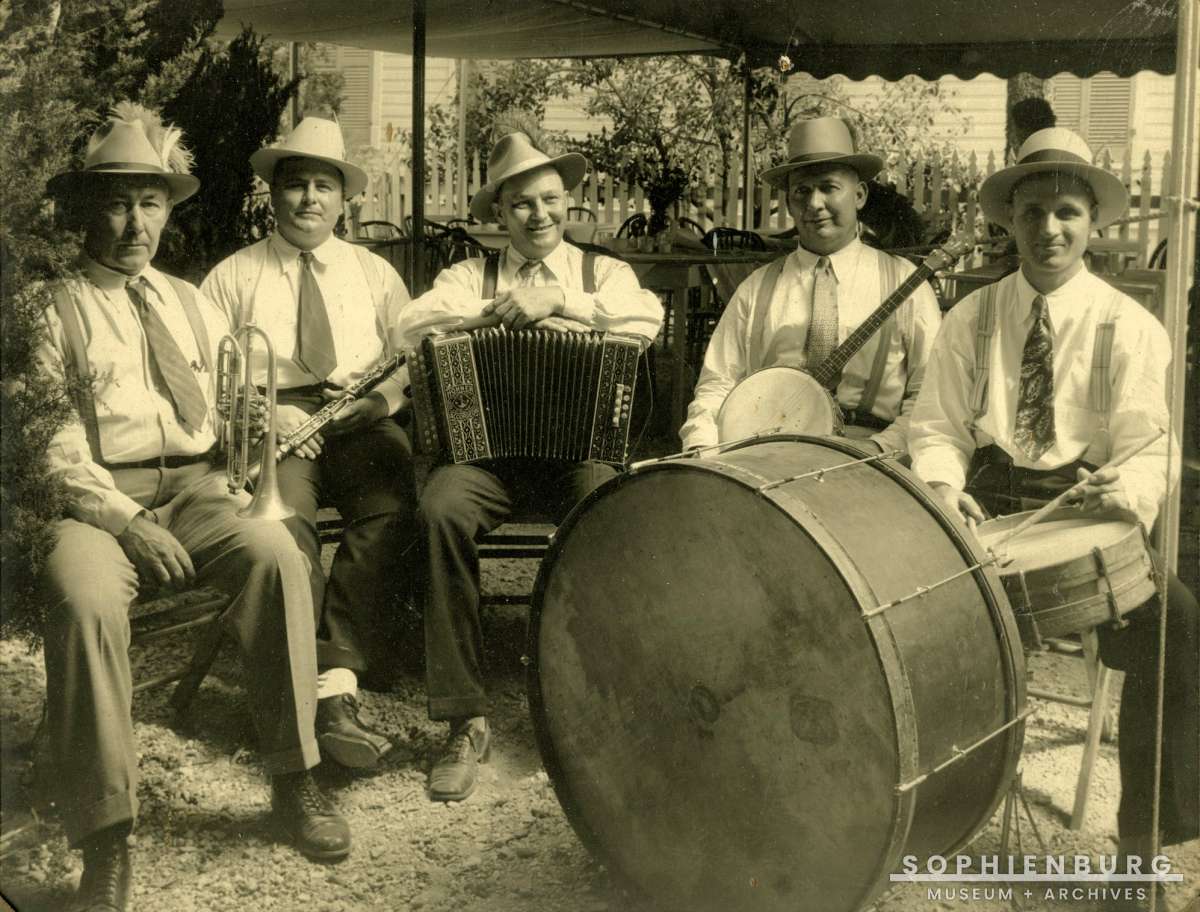
Dance halls were basically mandatory in these communities and bands were readily available since there were many men who knew how to play at least one instrument. Stringed and brass instruments came with the immigrants. Woodwinds like flutes, clarinets and saxophones were also prevalent. But the most distinctive instrument was the accordion.
The accordion is a wind instrument comprised of two reed organs connected by folding bellows. Sound is made by expanding and compressing the bellows forcing air through the reed organs. A keyboard of keys or buttons is used to play the melody.
The earliest accordion was invented by Friedrich Buschmann of Berlin, Germany in 1822; Buschmann called his instrument the Handäoline. In 1828, Armenian organ and piano maker Cyrill Demian created the Akkerdeon and chose that name based on the German word Akkord, which means chord.
The Germans, Czechs and Poles loved their accordions and the polka, and the music was heard often. In a wonderful turn of events, Texas-born Tejanos in the San Antonio area took the accordion, the polka sound and dance steps they heard and saw and invented the unique musical genre of conjunto. Conjunto blended the sound and rhythms from both German and Hispanic communities and remains popular in Texas music today.
The same beat, similar dance steps and the all-important sound of the accordion still echos in dance halls and street festivals. Even if you are new to the polka or conjunto sound, I guarantee that if you listen to the beat your foot will start tapping. If you listen closely to the words, you will often find yourself giggling. If you really listen to the music, I’m going to bet that you will get off your chair, grab yourself a partner and dance deliciously close in circles around and around the dance floor.
Sources: PBS Western Reserve: The History of Polka: From Europe to Northeast Ohio; Appalachian Freunde Polka Band; Handbook of Texas.
“Around the Sophienburg” is published every other weekend in the New Braunfels Herald-Zeitung.