Digitalkammer
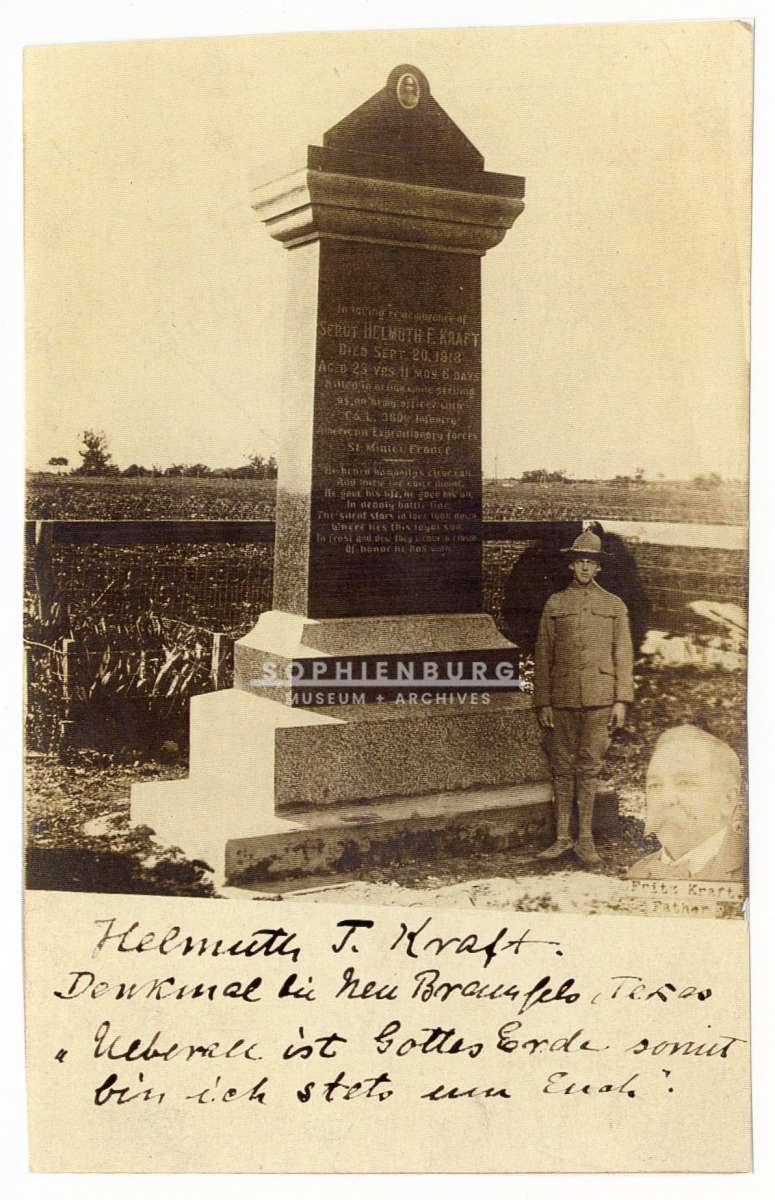
Sergeant Helmuth Fritz Kraft
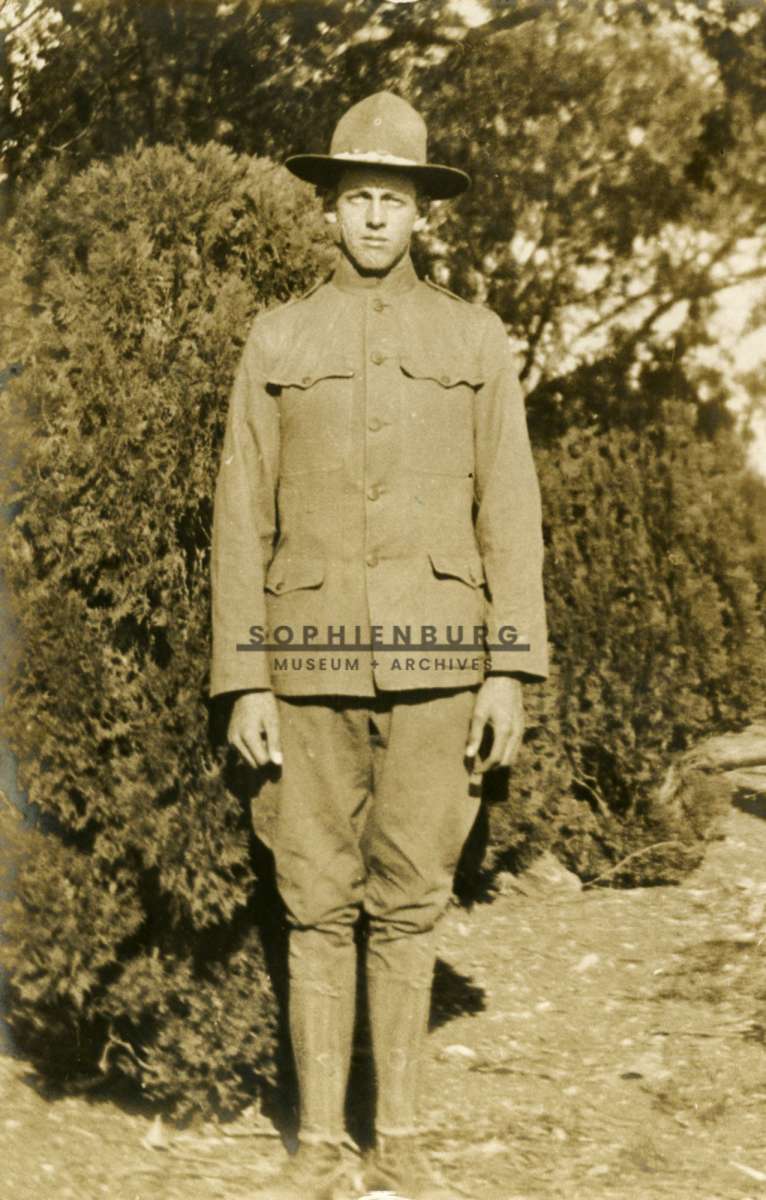
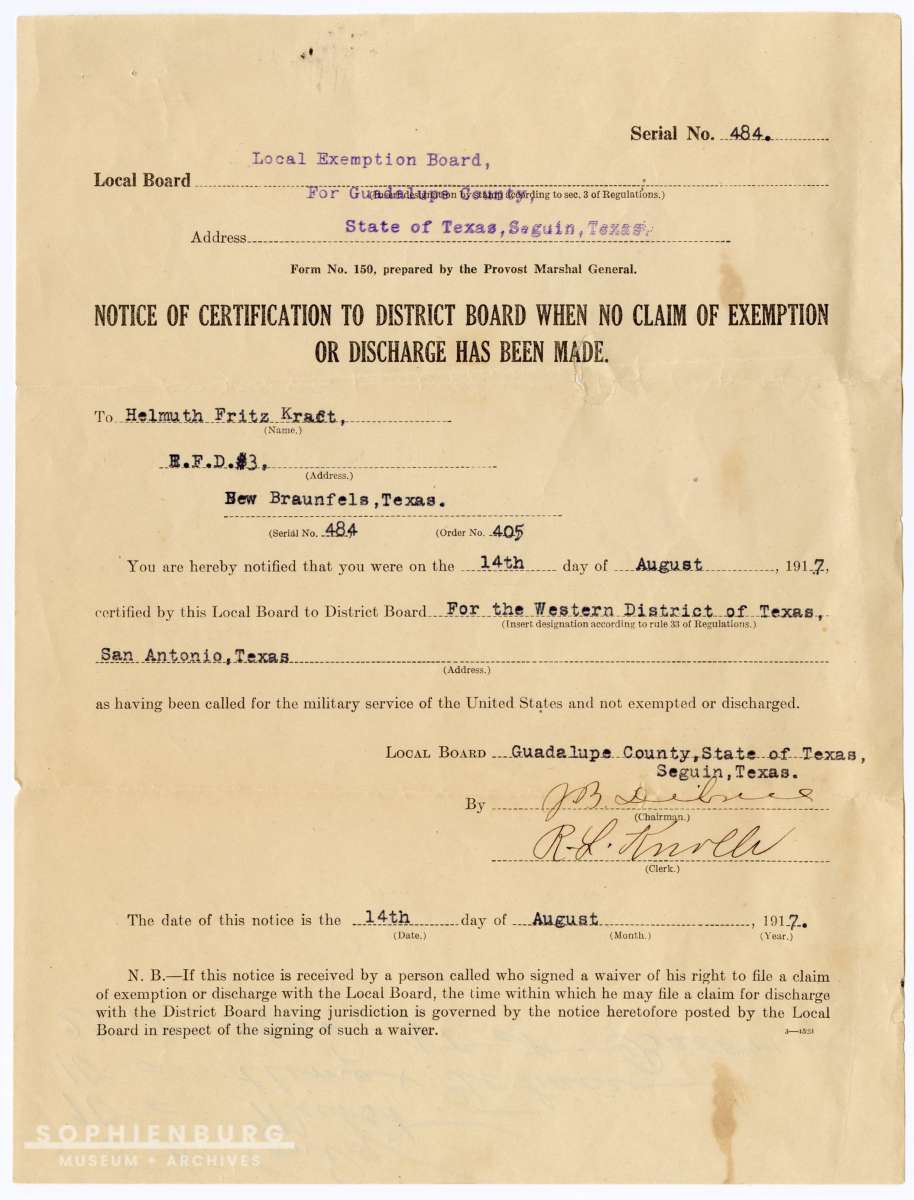
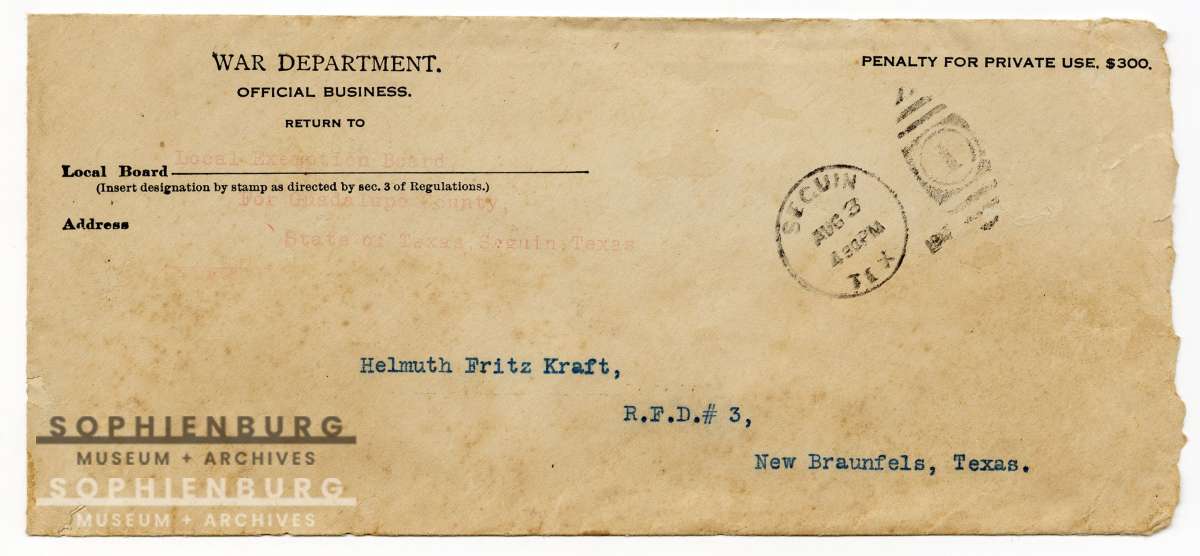
Helmuth Fritz Kraft was born in 1894 on family land near Clear Spring. In his childhood, he went to school, contributed to the farm and helped manage the cotton gin. A month before his 23rd birthday, he arrived at Camp Travis for basic training after being drafted. He was quickly promoted, even acting as platoon leader, and was a Sergeant by May 1918 when he and the 90th Infantry Division arrived on the shores of France.
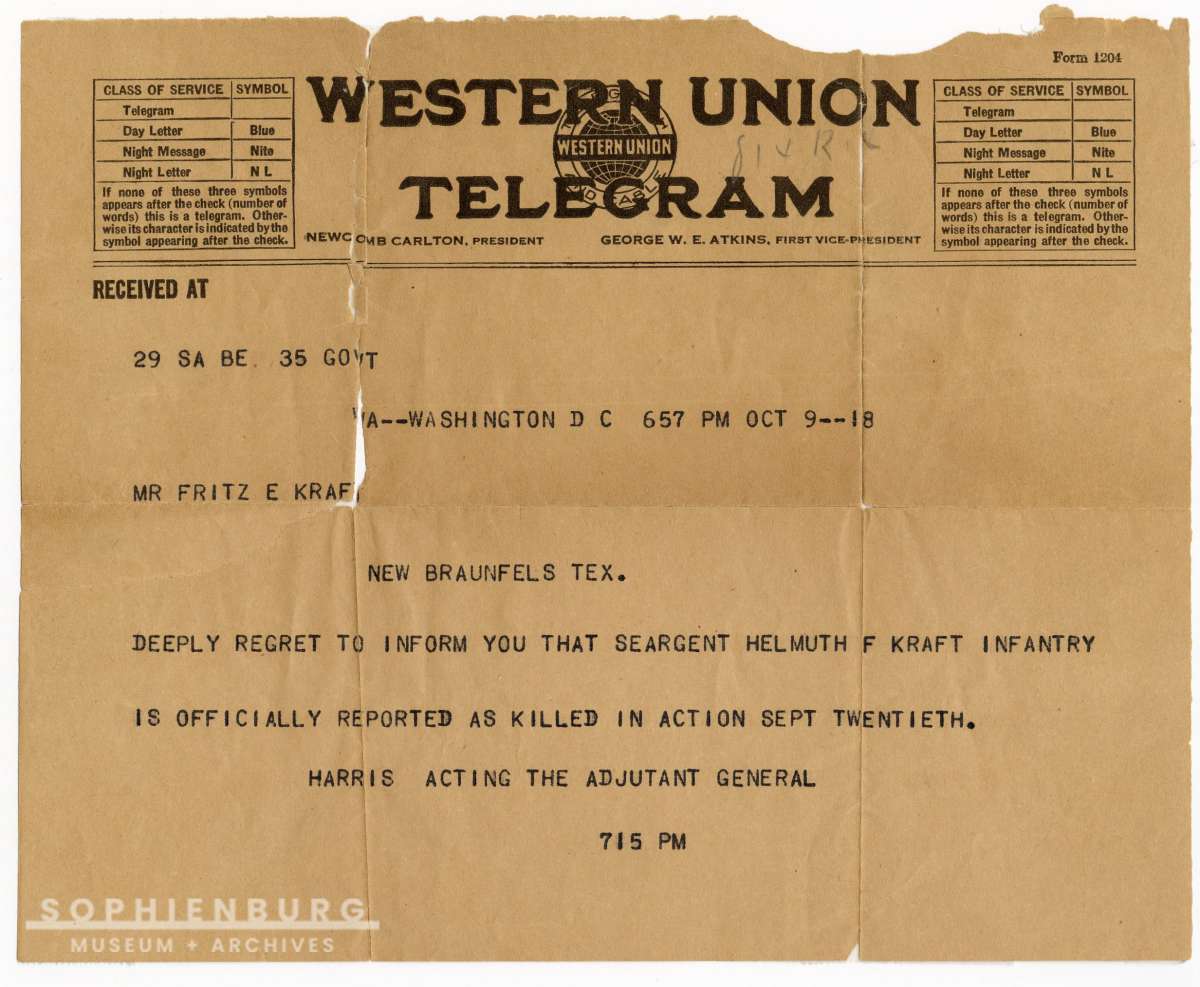
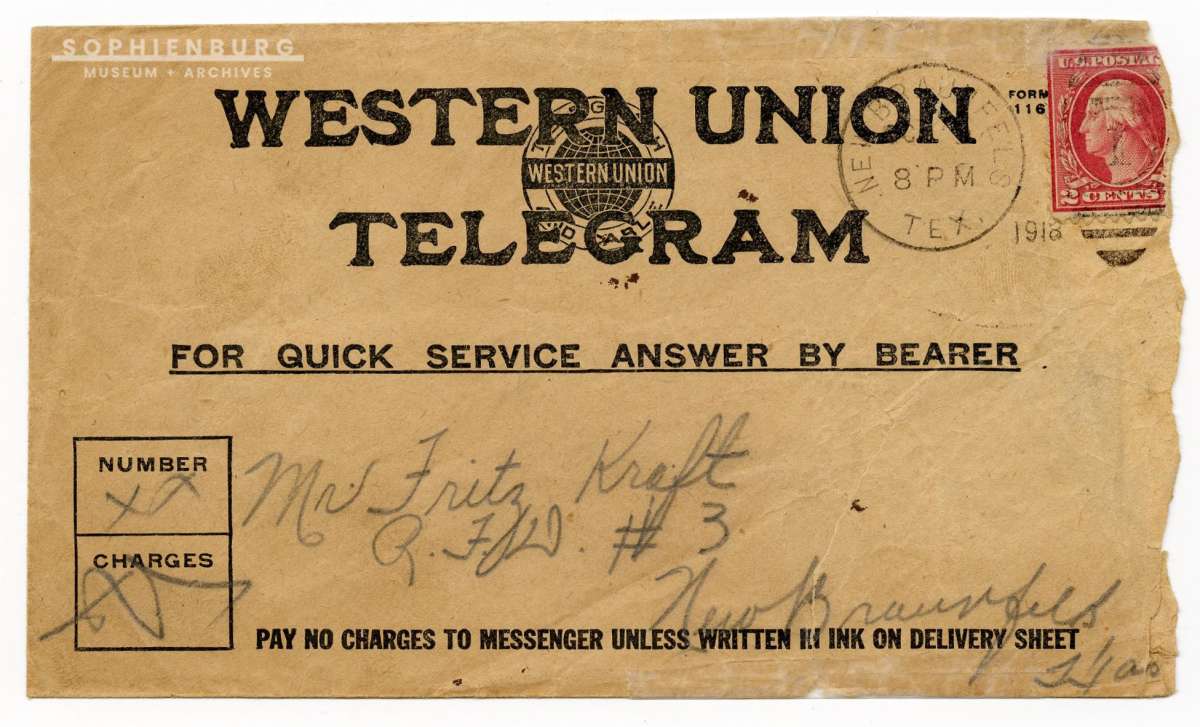
Officially Reported Killed in Action
Personal Effects Returned Home
Three items were returned home to the family, wristlets, a comb, and a compass were the personal effects of Sgt. Kraft; the items he had with him in the trenches of France. These common items come together to show the practical needs of the soldier and the story of Sgt. Helmuth Kraft.
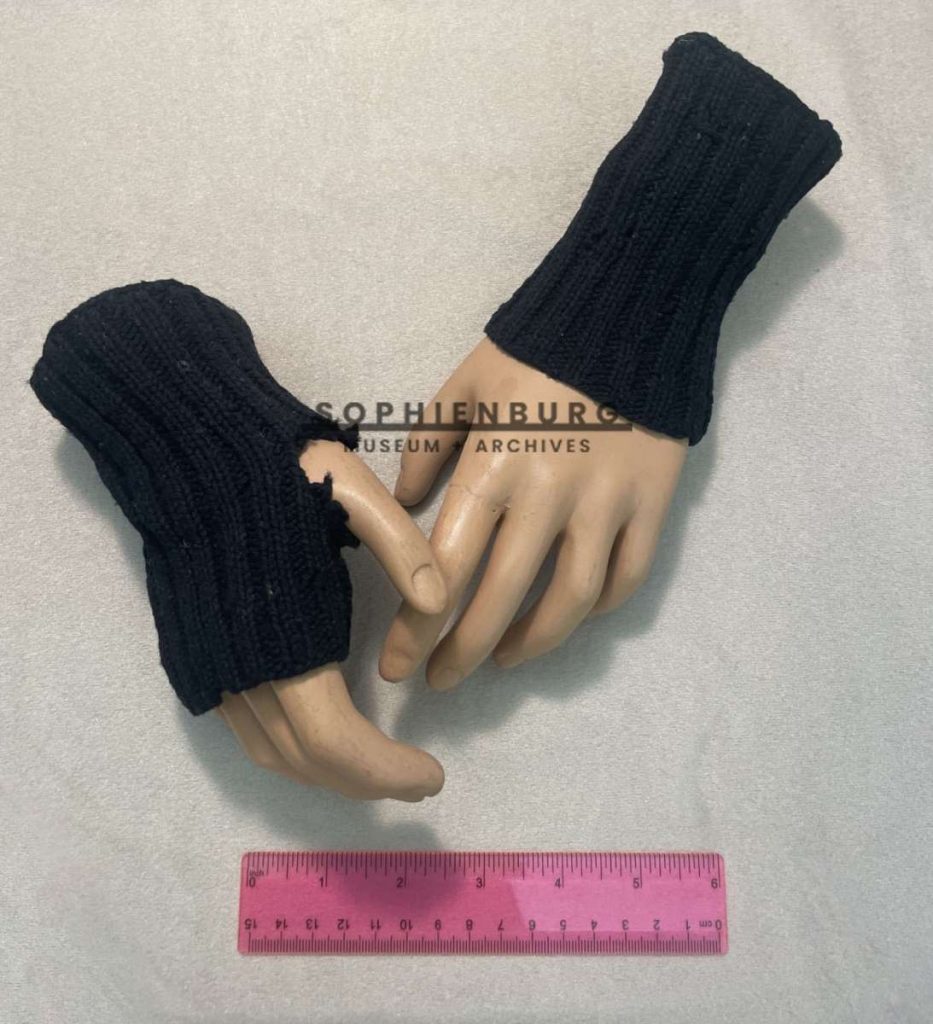
These wool wristlets were typical snivel gear for any frontline soldiers during cold weather in the Great War. Although there were army-issued wool products, shortages often left many soldiers in need of socks and hand warmers. These gaps were filled by homefront volunteer knitters who organized “comfort kits” for the boys fighting across the Atlantic. The trenches were cold and wet, and wool was a luxury for every soldier to keep their hands and feet warm. These black wool wristlets worn by Sgt. Kraft have a thumb hole in what was likely the right wristlet, while its counterpart acts more like a sleeve.
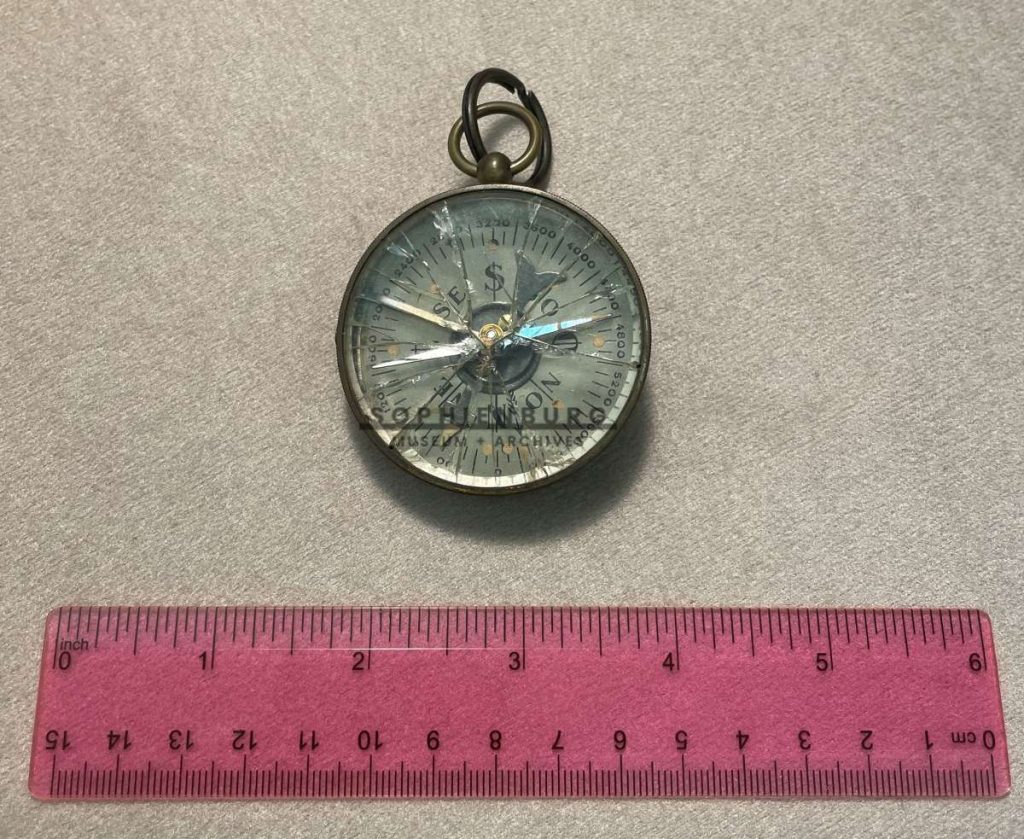
The compass is the third item that came home as part of Sgt. Kraft’s personal effects. The broken face mirrors Sgt. Kraft’s unfortunate end. Its own story is more interesting than at first glance, as this is a French compass. This is most easily seen in the symbol for West, which in French is Oest. French compasses contained several distinct features, including the French developed Millieme system of navigation, which divides the compass into 6400 units or “mils” to allow for accuracy of one meter of variation per mil across one kilometer. These calculations also were used by artillery crews to better find their targets. The compass also has luminous dials, allowing soldiers to continue navigating in the dark. While the paint’s ability to glow has deteriorated, it is still visible and the materials in it are still slightly radioactive! The compounds used in the paint have a radioactive half-life of 1,600 years, meaning it will stay this way for the coming centuries. We do not know how Sgt. Kraft acquired this, but it is certainly another necessity, especially for a platoon leader.
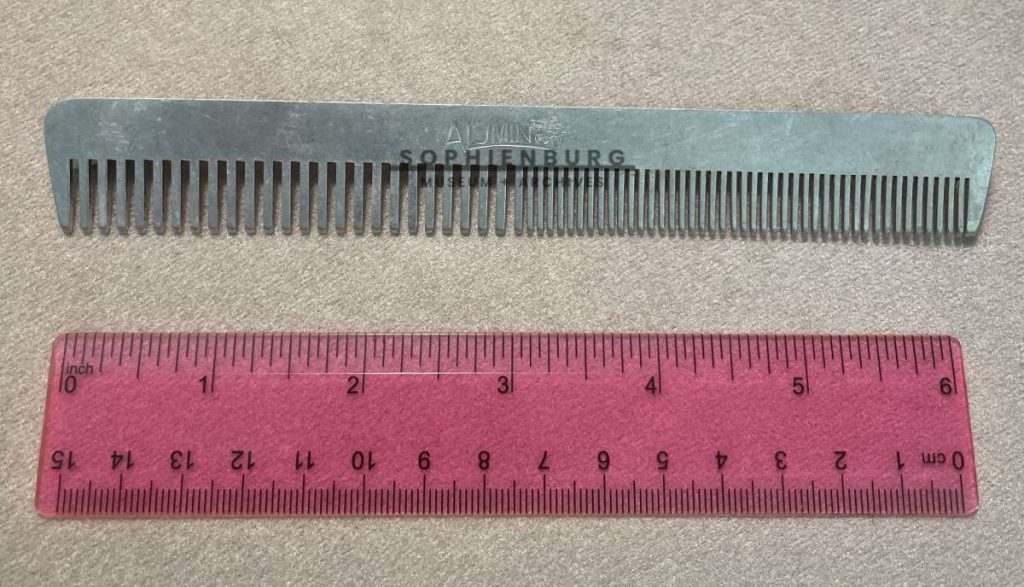
This aluminum comb is nearly identical to thousands of others that were manufactured in the early 20th century. Trench life was incredibly filthy, and any measures soldiers could use to keep clean and groomed were an improvement. Like the wool wristlets, these combs were often included in comfort kits to fill the gaps in the army-issued toiletry and hygiene needs. Although unknown, it is possible that both the comb and wristlets were a part of the same package.
The Burden of Sacrifice
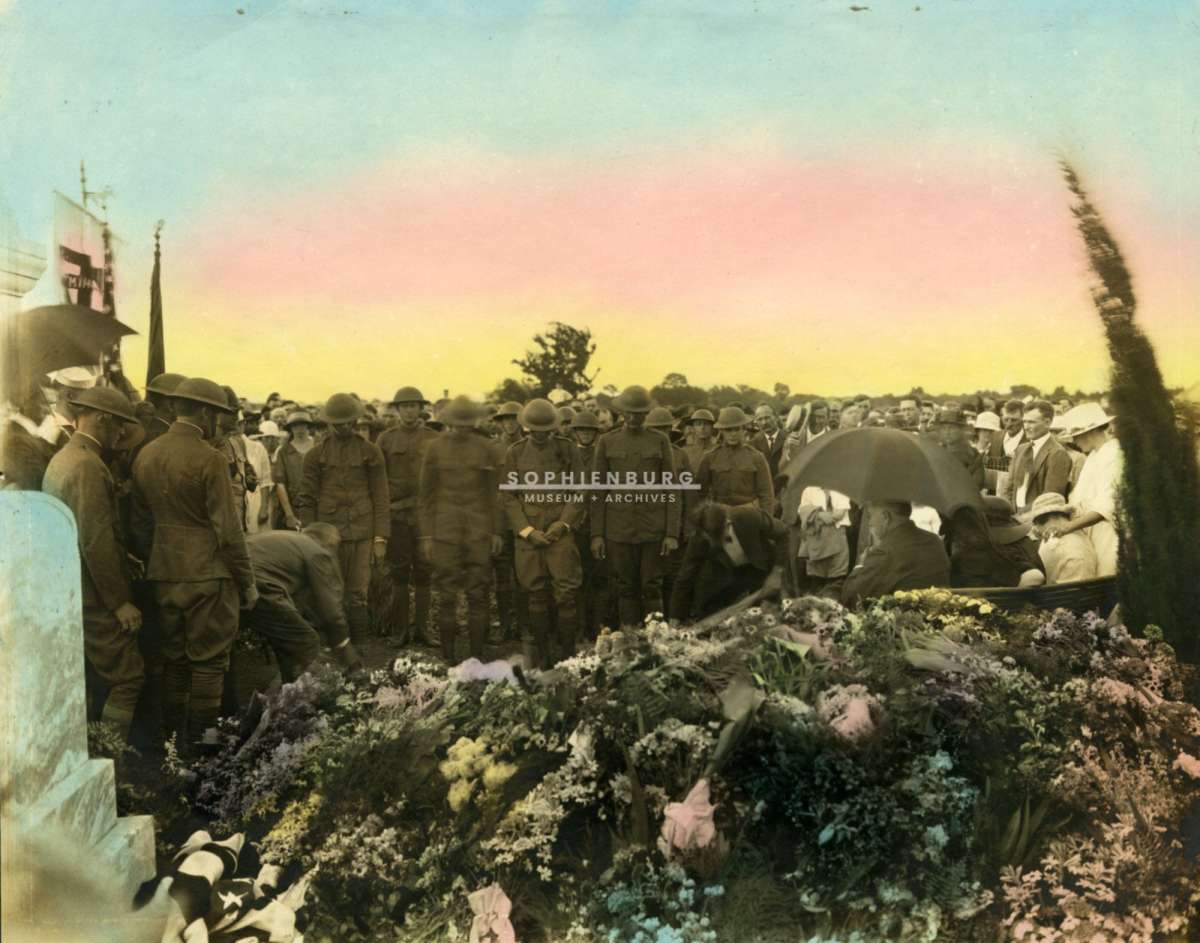
Although Sgt. Kraft died in France, his story does not end there. He was first buried at a battlefield cemetery behind the frontlines, with other fallen comrades. But his family wished for his return, and his remains finally returned to Texas in 1921. He was buried again in a family cemetery near his home. His journey had not yet ended, as the family sold the land and his remains had to be moved yet again. This time the resting place was final, and he now lies in the Hortontown Cemetery in New Braunfels.
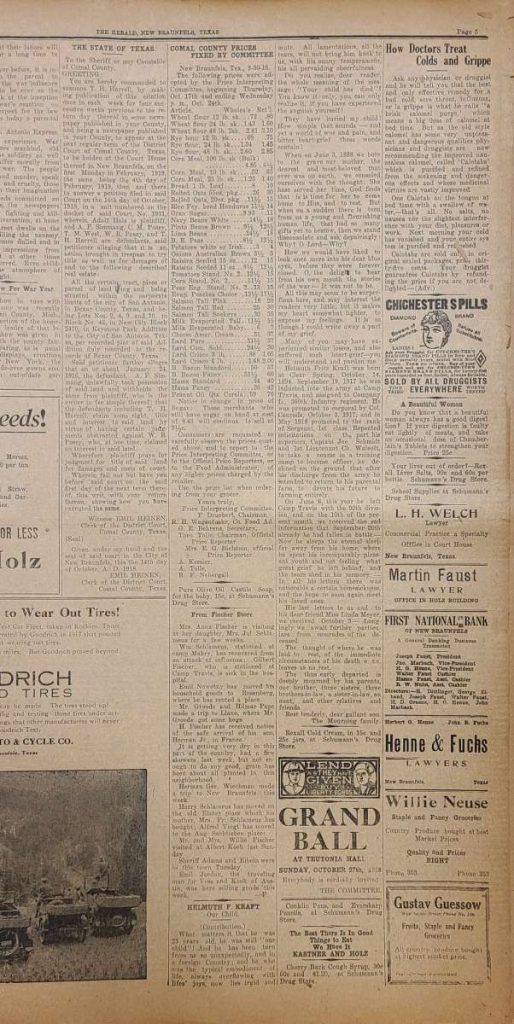
Our Child
Appeared in the New Braunfels Herald 10/18/1918
What matters is that he was 23 years old, he was still “our child”! And he has been torn from us so unexpectedly, and in a foreign Country; and he who was the typical embodiment of life, always overflowing with lifes joys, now lies rigid and mute. All lamentations, all the tears, will not bring him back to us, with his sunny temperament, his all pervading cheerfulness.
Do you realize, dear reader, the whole meaning of the message: “Your child has died”? You know it only, you can only realize it, if you have experienced the anguish yourself.
They have buried my child! How simple that sounds – and yet a world of woe and pain, and bitter heart-grief these words contain!
When on June 3, 1888 we bore the grave our mother, the dearest and most-beloved that ever was on earth, we consoled ourselves with the thought: She has served her time, God finds that it is time for her to come home to Him, and to rest. But when on a sudden there is torn from us a young and flourishing human life, that had so many gifts yet to bestow, then we stand disconsolate ands ask despairingly: Why? O Lord – Why?
How we would have liked to look once more into his dear blue eyes, before they were forever closed. O, the delight to hear from his own mouth the stories of the war — It was not to be.
All this may seem to be superfluous here, and may interest the readers very little, but it makes my heart somewhat lighter, to express my feelings. It is as though I could write away a part of my grief.
Many of you may have experienced similar losses, and also suffered such heart-grief — you will understand and pardon me.
Helmuth Fritz Kraft was born at Clear Spring, October 14, 1894. September 19, 1917 he was inducted into the army at Camp Travis, and assigned to Company L, 360th Infantry regiment. He was promoted to corporal by Col. Conrads, October 3, 1917, and in May 1918 promoted to the rank of Sergeant, 1st class. Repeated solicitations on the part of his superior Captain Joe Schmidt and Second Lieutenant Ch. Walcott, to take a course in a training camp to become officer, he declined on the ground that after his discharge from the army he intended to return to his parental farm, to devote his future to farming entirely.
On June 6, this year he left Camp Travis with the 90th division, and on the 10th of the present month we received the sad information that September 20th already he had fallen in battle –
Now he sleeps the eternal sleep far away from his home, where he spent his incomparably pleasant youth and not feeling what great grief he left behind, and the tears shed in his memory. In all his letters there was a noticeable certain homesickness, and the hope to soon again meet his loved ones.
His last letters to us and to his dear friend Miss Linda Meyer, we received October 3. –Longingly we await further particulars from comrades of the deceased.
The thought of where he was laid to rest, of the immediate circumstances of his death leaves us no rest.
The thus early departed is deeply mourned by his parents, one brother, three sisters, three brothers-in-law, a sister-in-law, an aunt, and other relatives and friends.
Rest tenderly, dear gallant son.
The Mourning family