By Keva Hoffmann Boardman —
The first ever 4th of July celebration was held in Philadelphia on July 4, 1777; it included an exhibition which began and ended with 13 rockets — one for each state of the new United States of America.
New Braunfels’ first July 4th celebration was in 1846, after Texas had officially become the 28th state of the Union. A large American flag was raised and flown at the Sophienburg. The two cannons were fired to announce the beginning of festivities.
The first mention of a local celebration with fireworks was in 1859 at the Schillerfest. This was a festival honoring the German poet, Friedrich Schiller’s 100th birthday. The festival included poetry readings, a performance of a Schiller play, songs by the singing society and also a dance — with a fireworks finale. The first recorded use of fireworks in New Braunfels on July 4th was in 1866, after the end of the Civil War.
Fireworks became increasingly incorporated into all kinds of local observances throughout the late 19th century. Many of the large gathering halls (Halle) in New Braunfels and Comal County advertised firework displays for all kinds of festivities. Some of them were Germania Halle, Breustedt’s Halle, Matzdorff’s Halle and Saengerhalle. Lots of the shows also featured cannonades.
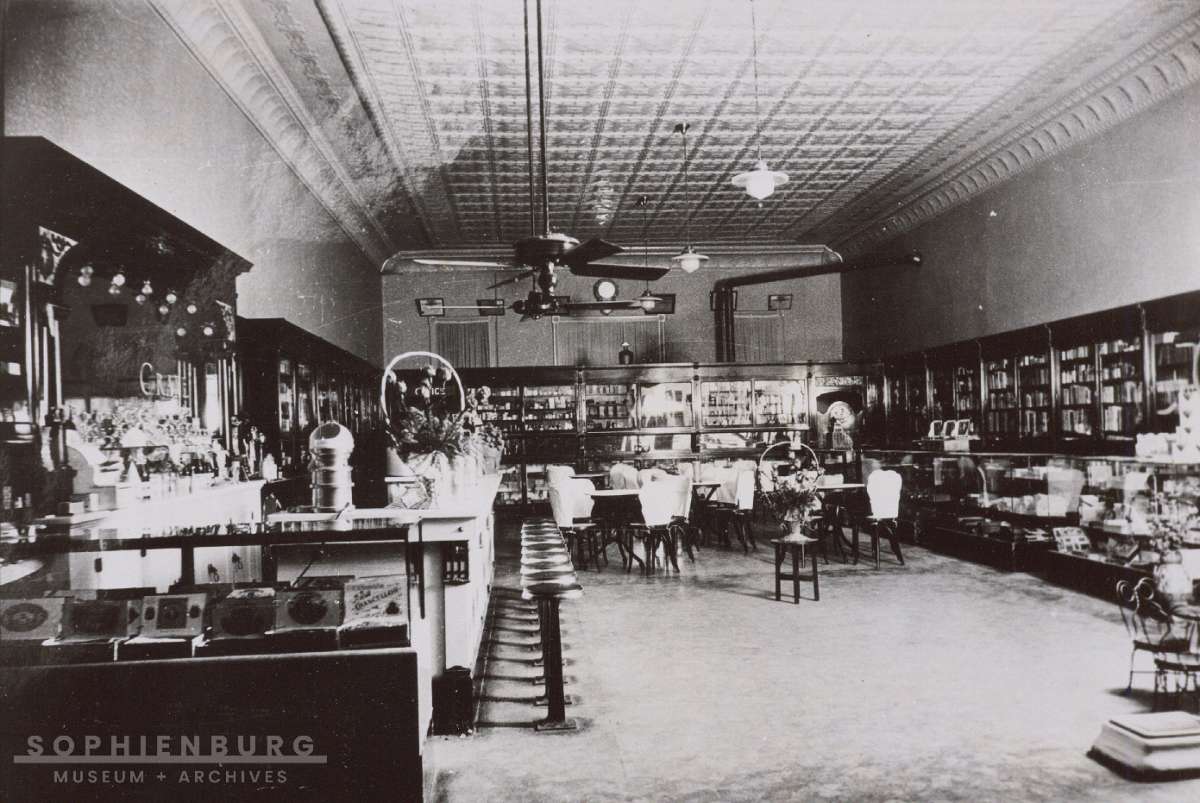
So where did they get the fireworks? The local pharmacist was the man in town whose profession was rooted in the alchemy and compounding of chemical ingredients. Most of the elements needed for fireworks doubled as medicinal components as well. The pharmacist, or druggist as he was then known, had shelves full of the necessary ingredients and the knowledge to put them together in the right amounts.
Fireworks require saltpeter, sulphur and charcoal, which are the basic ingredients found in gunpowder. The addition of potassium chlorate to the mixture allowed chemical colors to be enhanced and brightened. Red was the first color made by adding strontium nitrate. Green came next with the addition of barium nitrate.
New Braunfels’ 25th Anniversary in 1870 had a midnight fireworks show at the old Saengerhalle; the fireworks committee was led by Mr. Loep, Mr. Rohde and Mr. Brandt. In 1877, Friedrich Heidemeyer was in charge of firing the cannons and the fireworks on the 4th of July celebration; July 4th always included firework displays. Harvest festivals and Maifest (May Day Festivals) were commemorated at local schools with fireworks and dances. In May 1886, Mr. H. Fischer of Churchill, “a well-known authority in pyrotechnics”, was in charge of the city’s Maifest fireworks. Schuetzenfests (shooting club competitions) included fireworks at the end of shooting competitions. New Year’s Eve and Easter celebrations were observed with night parades using lit torches, lanterns, cannon fire and fireworks. Early New Braunfels did everything in a big way.
For America250, the Sophienburg Museum & Archives will have several exhibits reflecting New Braunfels’ pride in being American. The Pharmacy exhibit will display Mr. Rudolph Richter’s pharmaceutical “Recipe Book.” Along with hundreds of medicinal recipes, he had directions for making gunpowder, blasting powder and flash powder, There are many recipes for each color of fireworks which allowed him to use whichever chemicals he had on hand.
Stories and newspaper accounts link many early local pharmacists to gunpowder and fireworks manufactured for local festivals and celebrations: A. Forcke, H.V. Schumann, Rudolph Richter, and H. Fischer. Making fireworks was an exciting, albeit dangerous, job. August Forcke was badly burned in an explosion on July 2, 1876, while making fireworks for the U.S. Centennial celebration. He was mixing chemicals for “Bengal lights.” Bengal lights were hand-held sparklers that emitted colored flames and sparks; these were named for the Bengal region of India which was a major source of saltpeter.
Like today, businesses sometimes sponsored the making of fireworks and the firework shows. S.V. Pfeuffer, Ernst Gruene Jr., J.D. Guinn, Paul Engelhardt, Richard Gerlich, M.C. Church, Emil Galle and Dr. Garwood are often mentioned as sponsors and committee members for many city displays.
This year, as you enjoy the fireworks shot off in Landa Park, remember that they have been a major part of our country and our city’s celebration of our place in the United States of America. Remember with pride all the freedoms that come with being an American.
Sources: Sophienburg Museum & Archives; Neu Braunfelser Zeitung; New Braunfels Herald; KERA News: The Explosive Science Behind Fireworks.
“Around the Sophienburg” is published every other weekend in the New Braunfels Herald-Zeitung.